13a6e3ca1c
Three gaps, one theme: the editor could produce a file but not decide where
it went, what format it was in, or look like anything in the dock.

**Save as…** opens a real file dialog, and the extension typed there picks
the format. Save then writes to that file instead of dropping another copy
in Downloads every time. The renderer never names a path: the dialog returns
an opaque token, and the add-on will only write to a path a dialog actually
returned. An extension page is the least trusted thing in the add-on, and
"write these bytes anywhere" is not a capability it needs.

**PDF** goes through Chromium's own print pipeline in a hidden window — the
same engine as Ctrl+P — on the paper size read out of the document's own
sectPr. For that to match what the user was looking at, the page's
typography had to stop living in editor.css, which the export window can't
reach: it moves to lib/doc-css.js and both surfaces read the one string. The
result embeds subsetted fonts, keeps images, and turns hyperlinks into real
PDF link annotations.

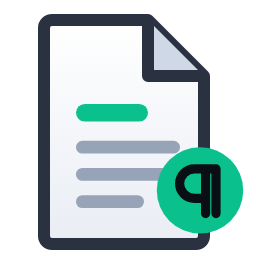
**The icon** is ours. Microsoft's Word mark is a trademark and borrowing it
to look official is not something a browser that talks about sovereignty
should do. icon.svg says "text document" in its own words — a turned corner,
a heading rule, body lines, a pilcrow badge in Silent Mode green — and
`npm run icons` derives the PNGs and addon.json's copy from it, so there is
one drawing rather than several that drift.

Also: the scratch folder follows the profile rename to extensions-data/ via
the api.dataDir the host now provides, instead of creating a stale
addons-data/ beside it.
7.9 KiB
256x256px
7.9 KiB
256x256px